
Corporate Trainer (TTT) Certificate Program
The Corporate Trainer (TTT) Certification Program is a comprehensive professional certificate designed to equip corporate trainers, HR professionals, and L&D leaders with advanced skills to design, deliver, and scale enterprise learning ecosystems aligned with business outcomes. This six-module curriculum blends strategy, instructional design, digital enablement, facilitation mastery, learner engagement, and ROI-driven training operations to transform trainers into strategic partners of organizational growth… Training Needs Analysis | Competency Mapping | Business Alignment | ADDIE Curriculum Design | Instructional Design | Content Development | Experiential Learning | Storytelling | Microlearning | Digital Learning | LMS Platforms | Virtual Facilitation | Facilitation Excellence | Communication Mastery | Group Dynamics | Learner Engagement | Coaching & Mentoring | Capability Development | Assessment & ROI | Kirkpatrick Model | Training Analytics | Governance | Training Business Strategy
CORPORATE TRAINER CERTIFICATION
People Manager


About the Certification Program

Professional Certificate Program on Train The Trainer (Corporate Trainer) for Corporate Training Eco- System Design and Implementation
The Professional Certificate Program on Train the Trainer for Corporate Training Eco-System Design and Implementation is an advanced learning journey crafted to empower HR professionals, L&D specialists, and corporate trainers to architect and deliver impactful training systems aligned with organizational goals. As corporate learning evolves into a strategic driver of business performance, this program equips participants with the skills to design scalable training ecosystems, integrate digital learning, and measure ROI with precision.
This certification prepares you to master facilitation excellence, instructional design, capability mapping, and corporate training governance. Whether you are stepping into new responsibilities or seeking to upskill in modern training practices, the program provides a structured pathway to build enterprise-ready training strategies.
Kick-start your Certified Corporate Trainer Journey with immersive modules, practical exercises, and case studies delivered by expert faculty—ensuring you remain relevant and future-ready in today’s dynamic corporate learning environment.
Salient Features of the Program
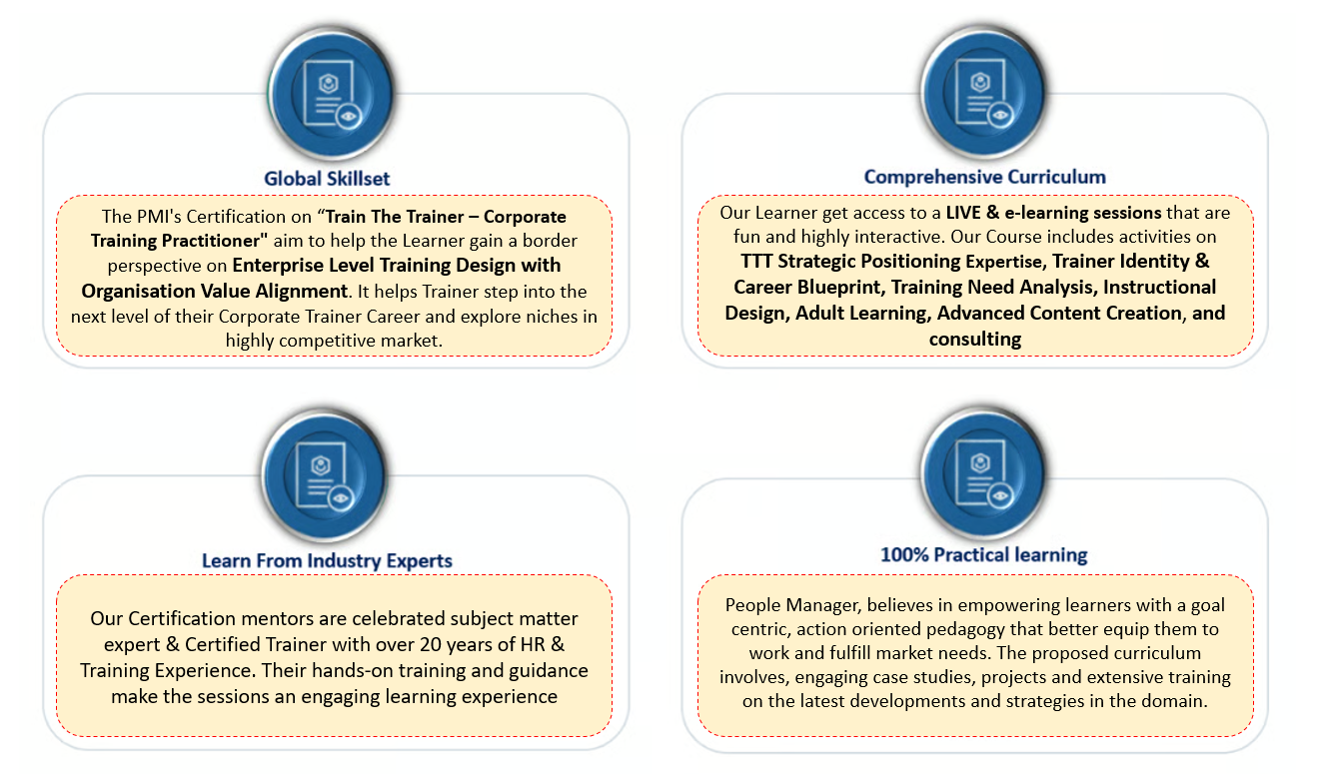
DUAL CERTIFICATE PROGRAM
5 out of 6 learners get positive career growth
Role Readiness
A set of elements to gauge your role readiness and chart your development plan
180*
90 Day
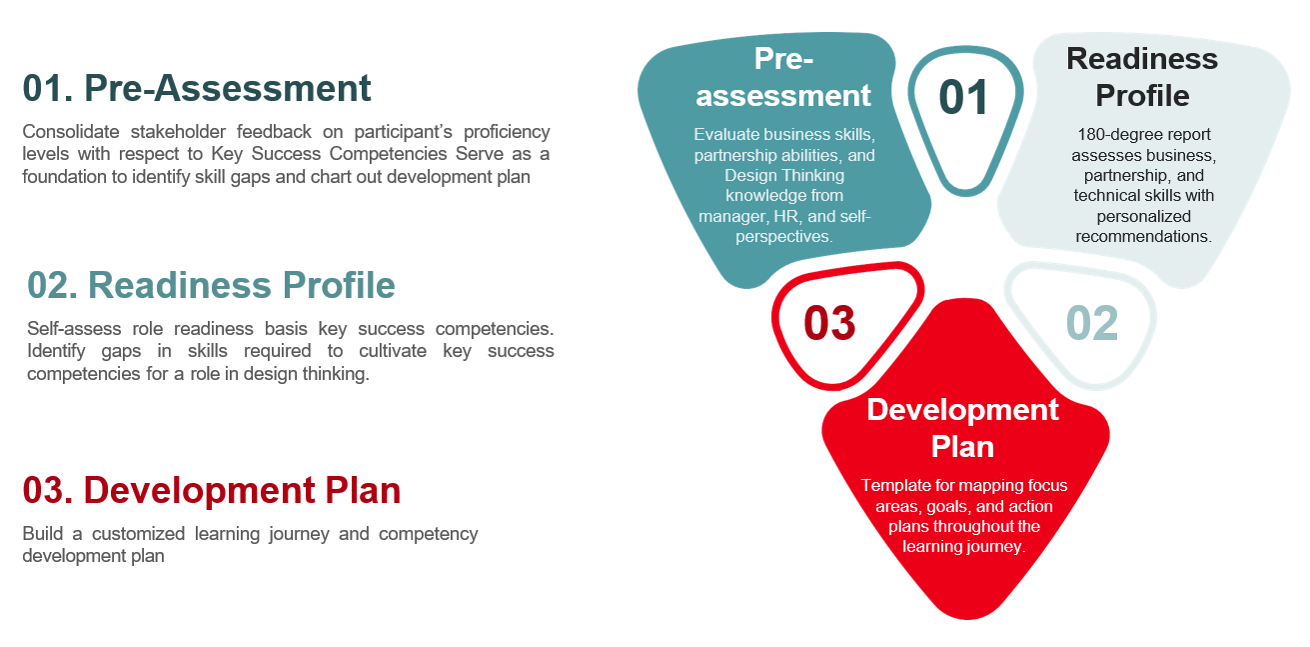
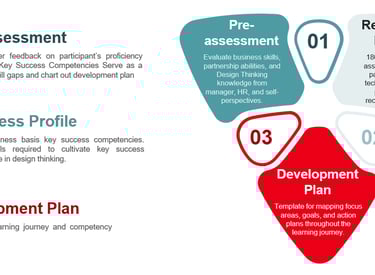
SKILL, ABILITY & POTENTIAL ASSESSMENT
4 Level Ability Building Roadmap
Benefits
4 DOMAINS , 10 COMPETENCIES & 80+ SKILLS DEVELOPMENT
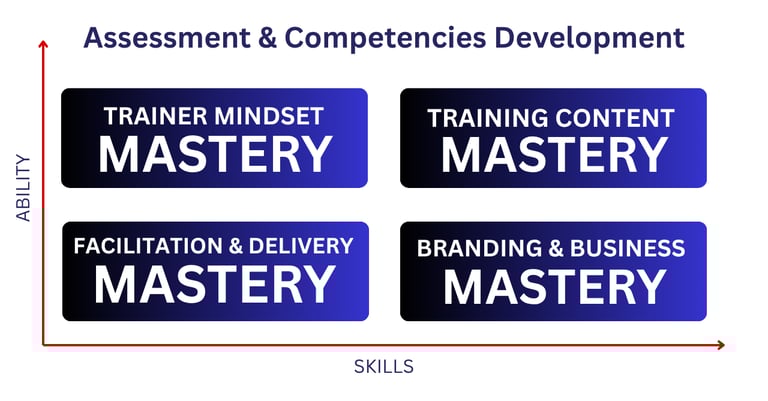
TRAINING STRATEGY & BUSINESS ALIGNMENT
Conduct Training Needs Analysis (TNA)
Align training with business strategy
Perform competency gap analysis
Define SMART learning objectives
Identify learner personas
Map skills to competencies
Conduct stakeholder interviews
Define success metrics
Align with KPIs & OKRs
Develop training roadmap
Learn 80+ Corporate Trainer Skills in One program for 4 Expertise Areas
LEARNING ARCHITECTURE & CURRICULUM DESIGN
Apply ADDIE model
Use Bloom’s Taxonomy
Design curriculum frameworks
Create lesson plans
Develop learning journeys
Design blended learning programs
Customize training for audiences
Develop on boarding programs
Design competency-based modules
Standardize training content
CONTENT DEVELOPMENT & INSTRUCTIONAL DESIGN
DIGITAL LEARNING & LEARNING TECHNOLOGIES
Develop facilitator guides
Create participant workbooks
Design training presentations
Develop case studies
Create simulations & role plays
Build experiential learning activities
Create job aids & quick guides
Design microlearning modules
Create storytelling-based content
Design scenario-based learning
Design e-learning modules
Create video-based training
Use LMS platforms
Facilitate virtual training sessions
Conduct hybrid training programs
Use digital tools (Zoom, Miro)
Facilitate breakout sessions
Use polls & quizzes
Implement learning technologies
Drive digital learning innovation
FACILITATION EXCELLENCE & DELIVERY
COMMUNICATION & PRESENTATION MASTERY
Deliver classroom training
Use storytelling in facilitation
Manage group dynamics
Handle difficult participants
Facilitate discussions
Deliver simulations
Apply adult learning principles
Manage session timing
Deliver impactful openings & closures
Deliver high-energy sessions
Use voice modulation
Apply body language effectively
Deliver high-impact presentations
Build rapport with participants
Handle Q&A sessions
Manage objections
Use questioning techniques
Summarize key takeaways
Provide real-time feedback
Communicate with executive presence
LEARNER ENGAGEMENT & EXPERIENCE DESIGN
ASSESSMENT, ANALYTICS & ROI MEASUREMENT
Engage participants actively
Facilitate peer learning
Conduct icebreakers
Deliver energizers
Use visual aids effectively
Create interactive activities
Design group discussions
Manage learning energy levels
Build psychological safety
Adapt to different learning styles
Design pre-training assessments
Conduct post-training evaluations
Measure learning effectiveness
Apply Kirkpatrick Model
Conduct knowledge tests
Measure behaviour change
Track performance improvement
Conduct ROI analysis
Track learning analytics
COACHING, MENTORING & CAPABILITY BUILDING
TRAINING OPERATIONS, BUSINESS & GOVERNANCE
Coach new trainers
Conduct coaching sessions
Provide structured feedback
Mentor junior trainers
Develop coaching frameworks
Conduct capability assessments
Build trainer competencies
Develop leadership capabilities
Build emotional intelligence
Create learning communities
Manage training logistics
Coordinate stakeholders
Manage training budgets
Track training schedules
Ensure compliance training
Maintain training records
Build governance models
Conduct cost-benefit analysis
Identify risks in training rollout
Continuously improve training programs
Objectives - Train The Trainer - Corporate Trainer Certification
The objectives of the Train The Trainer Certification – Trainer Mindset Mastery, Content Mastery, Training Delivery & Business Branding are to validate skills of learners in:
Trainer identity & positioning: self-assessment, niche definition, career blueprinting.
Training industry fundamentals: ADDIE mastery, lifecycle mapping, corporate vs freelance pathways.
Training need analysis (TNA): GAP frameworks, stakeholder interviews, KPI alignment.
Instructional design & adult learning: Bloom’s taxonomy, andragogy, retention strategies, storytelling.
Advanced content creation: gamification, case studies, simulations, activity toolkits.
Customization & industry alignment: sector-specific adaptations, role-based training design.
Facilitation & delivery excellence: stage presence, group dynamics, objection handling.
Performance & impact measurement: Kirkpatrick model, ROI dashboards, continuous improvement cycles.
Personal branding & business building: positioning, social media strategy, pricing models, client acquisition.
Outcome: Certified Train-the-Trainer Professional, equipped to design, deliver, and optimize impactful training programs while building a strong personal brand and sustainable business presence.
What Makes This Program Unique?
The PMI Certified Talent Acquisition Ready Practitioner/Professional Certificate provides a holistic and Organizational Objective-centric view of the Talent Acquisition landscape, addressing both fundamentals and emerging talent acquisition trends.
Program Schedule & Enrollment
LIVE Training & Selfpaced Learning Option. Designed for Working professionals. Learning after work hours and on your terms with lifetime access




Batch Start - Saturday 5 September - 2026
Self learning- LMS based
Time - Any Time
Program Duration - 4 Months
Program Regular Fee - 69999/-
Today Offer Fee - 4500/-
What you will get:
Live CTTTCT Active Competencies worth - 10000/-
Proficiency Assessment Worth - 25000/-
Individual Development Plan worth - 10000/-
Lifetime Video Recording worth - 15000/-
200 Ready Reckoner worth - 10000/-
PMI Certification Assessment - 12000/-
40 Hours of LMS based Learning Access - 30000/-
DON'T MISS , GET IT NOW !! OFFER VALID FOR 24 HOURS ONLY
LIVE TRAINING - PREMIUM PLAN
Batch Start - Saturday 5 September - 2026
Live Session- Every Saturday
Time - 18:00 to 20:00 pm
Program Duration - 4 Months
Program Regular Fee - 69999/-
What you will get:
Live CTTTCT Active Competencies worth - 10000/-
Proficiency Assessment Worth - 25000/-
Individual Development Plan worth - 10000/-
Live Training - 15+ Sessions worth - 75000/-
Lifetime Video Recording worth - 15000/-
200 Ready Reckoner worth - 10000/-
PMI Certification Assessment - 12000/-
40 Hours of LMS based Learning Access - 15000/-
DON'T MISS , GET IT NOW !! OFFER VALID FOR 24 HOURS ONLY
SELF LEARNING - STANDARD PLAN
Key Deliverable
What is in this program for you!!




Key Takeaways
40 Hours of Action-Oriented Online Learning
Guaranteed Opportunities For Career Growth
Practice Materials and DIY Toolkits
Lifetime Videos of All Sessions
Completion Certificate
Pre Course Online skill Assessment
Post Course Completion Online Assessment for Certification
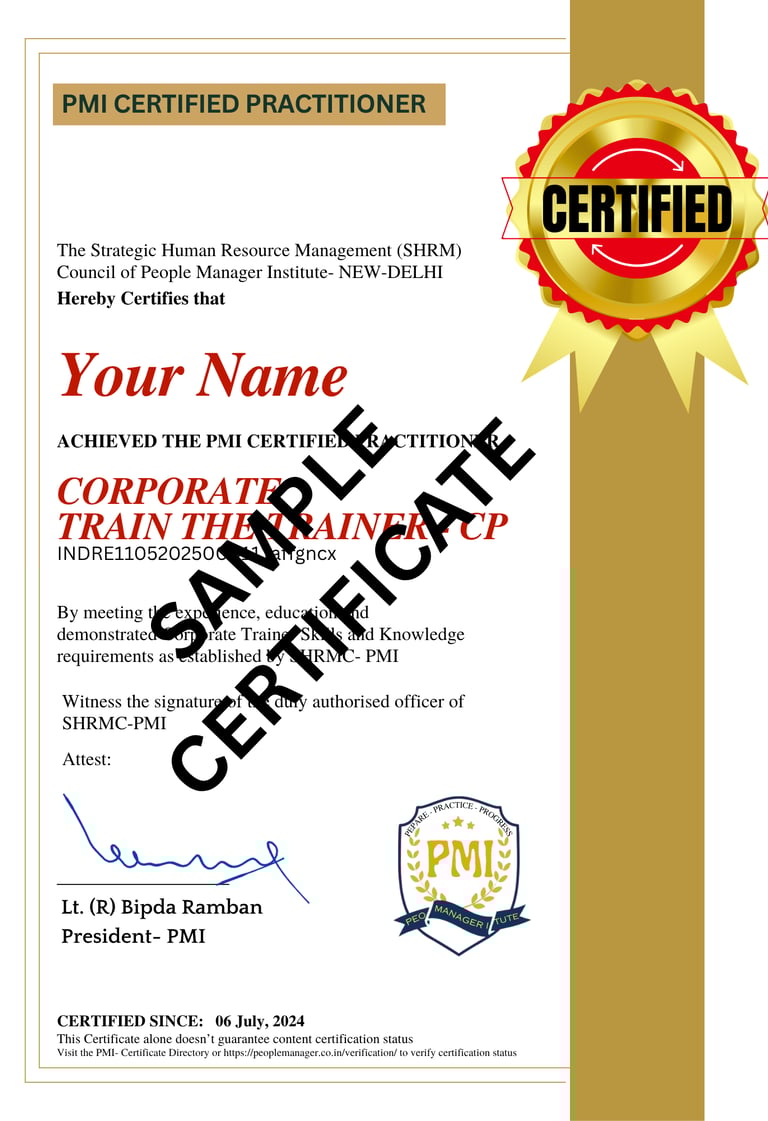
Certified Train The Trainer Certificate
Who Can Join?
The CTTTCT Certification suits for HR professionals, Learning and Development Specialists, Organizational Development Consultants, Managers, Team Leaders, aspiring Corporate Trainer, and anyone enthusiastic about fostering strategy driving organizational Excellence.
Syllabus
This course is structured into Six Practical Modules. The Main structure of the Program is as follows:


MODULE 1: TRAINING STRATEGY, BUSINESS ALIGNMENT & LEARNING ARCHITECTURE
Objective: Equip trainers to align learning interventions with business strategy, identify capability gaps, and design structured, outcome-driven learning architectures.
Chapter 1: Training Needs Analysis (TNA) & Competency Mapping
• Conduct organizational, task, and individual-level TNA
• Perform competency gap analysis using skill matrices
• Map business problems to capability gaps
• Identify learner personas and role-based needs
Exercise: Build AI-assisted TNA diagnostic questionnaire
Chapter 2: Business Alignment & KPI Integration
• Align training programs with business strategy and goals
• Map training outcomes to KPIs and OKRs
• Define measurable success metrics for learning interventions
• Link workforce capability with revenue, productivity, and cost metrics
Case study: Training impact on sales productivity improvement
Chapter 3: Learning Objectives & Roadmap Design
• Define SMART learning objectives aligned to outcomes
• Map skills to competency frameworks
• Develop short-term and long-term training roadmaps
• Prioritize high-impact capability areas
Workshop: Build a 6-month enterprise training roadmap
Chapter 4: Curriculum Framework & ADDIE Model
• Apply ADDIE model for structured training design
• Develop curriculum frameworks and modular learning paths
• Design competency-based training modules
• Standardize learning architecture across programs
Simulation: Design end-to-end curriculum using ADDIE
MODULE 2: INSTRUCTIONAL DESIGN & CONTENT DEVELOPMENT
Objective: Enable trainers to design high-impact learning content using instructional design principles, experiential methods, and structured learning assets.
Chapter 1: Instructional Design Foundations
• Apply Bloom’s Taxonomy in learning design
• Structure lesson plans and session flows
• Design learning journeys and module sequencing
• Balance content, context, and outcomes
Exercise: Convert business topic into structured lesson plan
Chapter 2: Content Development & Training Assets
• Develop facilitator guides and participant workbooks
• Design impactful training presentations
• Create job aids, quick reference guides, and templates
• Standardize content for scalability
Workshop: Build complete training module kit
Chapter 3: Experiential Learning Design
• Develop case studies based on real business scenarios
• Create simulations and role plays for skill application
• Design gamification and experiential activities
• Build scenario-based learning frameworks
Case: Transform theory into experiential learning module
Chapter 4: Storytelling & Microlearning
• Create storytelling-based learning content
• Design microlearning modules for retention
• Develop bite-sized digital learning assets
• Use narratives for engagement and recall
Exercise: Create 5-minute microlearning video script
MODULE 3: DIGITAL LEARNING & TECHNOLOGY ENABLEMENT
MODULE 4: FACILITATION EXCELLENCE & COMMUNICATION MASTERY
MODULE 5: LEARNER EXPERIENCE, ENGAGEMENT & CAPABILITY BUILDING
MODULE 6: ASSESSMENT, ROI, OPERATIONS & TRAINING BUSINESS
Objective: Equip trainers with digital capabilities to design, deliver, and scale learning using modern tools, platforms, and hybrid models.
Chapter 1: E-Learning & Video-Based Training
• Design e-learning modules and digital courses
• Create video-based learning content
• Structure asynchronous learning journeys
• Integrate multimedia learning elements
Exercise: Build storyboard for e-learning module
Chapter 2: LMS & Learning Platforms
• Use LMS platforms for training delivery and tracking
• Manage learner journeys and certifications
• Track learning data and participation
• Automate training workflows
Workshop: Configure LMS-based training program
Chapter 3: Virtual & Hybrid Facilitation
• Facilitate virtual training sessions effectively
• Conduct hybrid training programs
• Use breakout rooms, polls, and engagement tools
• Manage virtual learning environments
Simulation: Deliver live virtual training session
Chapter 4: Digital Tools & Innovation
• Use tools like Zoom, Miro, Mentimeter
• Design interactive digital learning experiences
• Implement learning technologies for scalability
• Drive innovation in digital learning ecosystems
Case study: Digital transformation of corporate learning
Objective: Develop high-impact facilitation and communication skills to deliver engaging, confident, and outcome-driven training sessions.
Chapter 1: Facilitation Mastery
• Deliver classroom and workshop-based training
• Apply adult learning principles in facilitation
• Manage session flow, timing, and transitions
• Deliver impactful openings and closures
Exercise: Conduct 30-minute live facilitation
Chapter 2: Communication & Presentation Skills
• Use voice modulation and body language effectively
• Deliver high-impact presentations
• Build executive presence and credibility
• Structure communication for clarity and impact
Workshop: Record and analyze presentation delivery
Chapter 3: Managing Group Dynamics
• Handle difficult participants and objections
• Facilitate discussions and peer learning
• Manage group energy and engagement
• Handle conflicts and resistance
Simulation: Manage challenging classroom scenarios
Chapter 4: Q&A, Feedback & Influence
• Handle Q&A sessions confidently
• Use questioning techniques effectively
• Provide real-time constructive feedback
• Summarize and reinforce key learning
Exercise: Practice executive-level Q&A handling
Objective: Enable trainers to design engaging learning experiences, build learner-centric environments, and develop long-term capabilities.
Chapter 1: Learner Engagement Strategies
• Engage participants using interactive techniques
• Conduct icebreakers and energizers
• Use visual aids and storytelling effectively
• Maintain learning energy throughout sessions
Exercise: Design engagement strategy for 1-day workshop
Chapter 2: Experience Design & Learning Psychology
• Design learner-centric experiences
• Build psychological safety in learning environments
• Adapt to different learning styles
• Enable peer learning and collaboration
Case: Redesign low-engagement training program
Chapter 3: Coaching & Mentoring Trainers
• Conduct coaching sessions for trainers
• Provide structured developmental feedback
• Mentor junior trainers and facilitators
• Build coaching frameworks for capability development
Simulation: Conduct trainer coaching session
Chapter 4: Leadership & Capability Development
• Build trainer competencies and career pathways
• Develop leadership and emotional intelligence
• Create learning communities and ecosystems
• Drive continuous capability building
Workshop: Design trainer capability development plan
Objective: Equip trainers to measure impact, manage training operations, and run training as a scalable business function.
Chapter 1: Assessment & Learning Effectiveness
• Design pre-training and post-training assessments
• Conduct knowledge and skill evaluations
• Measure learning effectiveness using frameworks
• Track behavioral change post training
Exercise: Build assessment toolkit
Chapter 2: Training ROI & Analytics
• Apply Kirkpatrick Model (L1–L4)
• Measure training ROI and business impact
• Track performance improvement metrics
• Develop learning analytics dashboards
Case study: ROI calculation for leadership program
Chapter 3: Training Operations & Governance
• Manage training logistics and schedules
• Coordinate stakeholders and vendors
• Maintain training records and compliance
• Build governance and quality frameworks
Simulation: Manage enterprise training rollout
Chapter 4: Training Business & Financial Management
• Manage training budgets and cost structures
• Conduct cost-benefit analysis of training programs
• Identify risks in training implementation
• Build sustainable training business models
Scenario: Design profitable training business strategy
Program Delivery Approach
Real Case Studies: Includes examples from global Trainers.
Hands-On Projects: Learners design Process structures and Execution plans.
Interactive Workshops: Practical application with real-world scenarios.
Role-Play & Simulations: Engaging exercises to develop communication and influencing skills.


16+
4
Months of Duration
PRACTICAL WORKSHOPS
ACCOMPLISHMENT
Upon completion of your Learning Journey
📝 Assessment & Certification
Evaluation Methods
Practical Assignments (Case studies, Mock testing)
Live Simulations (Role-play Strategic Trainer Mindset, TTT Vision Statement, Capability gap identification)
Workforce Planning Tests (Trainer Growth & Challenges, Training Need Analysis, Content Development
Global Change Fitment (Participants analyze real-world Corporate Trainer Challenges)
Final Certification
Participants receive a Certified Train The Trainer certificate upon successful completion.
Don't Miss!!
Enroll Now to become Certified Corporate Trainer
PRE-ASSESSMENT
Assess Your Current skills in Training & Business Acumen , Training Architect, Content Intelligence & Trainer Strategy to align yourself with the Expert abilities
Practices with Experts to build your capabilities in TNA, Training design, Content Mastery, Hight Impact Facilitation, Training Delivery Excellence, Training Effectiveness and Personal Branding for Trainers
Evaluate Your Nurtured Ability Post Program Completion and become Certified Corporate Trainer