Certified Most Influential (High Impact Manager) Managerial Role-Ready Practitioner
Assess Your Managerial Effectiveness. Develop Advanced Capabilities. Become a More Influential Manager: Strategic Thinking | Business Acumen | Systems Thinking | Decision Intelligence | Critical Thinking | Stakeholder Influence | Executive Communication | Negotiation & Conflict Resolution | Emotional Intelligence | Coaching & Mentoring | Performance Leadership | Talent Development | Root-Cause Analysis | Strategic Prioritization | Execution Excellence | Change Leadership | Digital & AI Intelligence | Data-Driven Decision-Making | Innovation & Continuous Improvement | Ethical Leadership | Trust & Accountability | Managerial Effectiveness Assessment | Capability Development | Workplace Impact | Organizational Excellence
HIGH IMPACT MANAGER CERTIFICATION
PEOPLE MANAGER


The Certified Most Influential Manager-Ready Practitioner Certification Program is an advanced professional development program designed to equip managers, functional leaders, and aspiring managerial professionals with future-ready capabilities to influence stakeholders, develop high-performing teams, make strategic decisions, and deliver measurable business outcomes. This six-module curriculum integrates strategic thinking, business acumen, decision intelligence, leadership influence, emotional intelligence, performance leadership, complex problem-solving, change management, digital and AI intelligence, and organizational impact to transform managers into influential, accountable, and future-ready managerial practitioners.
The Certified Most Influential Manager-Ready Practitioner program is designed for working professionals who want to strengthen their managerial effectiveness and prepare themselves for more complex leadership responsibilities.
The program follows a structured capability development journey that combines managerial assessment, personalized development, applied learning, and post-program evaluation.
Participants explore the essential capabilities required to lead people, influence stakeholders, make effective business decisions, solve complex problems, drive execution, and build sustainable team performance.
Rather than relying exclusively on conventional management training, the program emphasizes the practical application of managerial capabilities in real workplace situations.
Participants will learn to:
Assess their current managerial capabilities and effectiveness.
Identify critical strengths and development priorities.
Strengthen strategic thinking and business acumen.
Develop influence, communication, negotiation, and stakeholder management capabilities.
Build emotional intelligence, coaching, and performance leadership skills.
Improve decision-making, problem-solving, and execution discipline.
Lead organizational change and continuous improvement.
Apply data, digital tools, and AI responsibly to managerial work.
Develop a personalized managerial development roadmap.
Demonstrate capability improvement through practical assignments and workplace application.
Program Outcome: Develop the knowledge, behaviours, and practical capabilities required to become a more influential, effective, accountable, and future-ready manager.


About the Certification Program
Professional Certificate Program in Advanced Managerial Capabilities Development & Managerial Effectiveness
Salient Features of the Program
DUAL CERTIFICATE PROGRAM
5 out of 6 learners get positive career growth


Role Readiness
SKILL, ABILITY & POTENTIAL ASSESSMENT
180*
120 Day

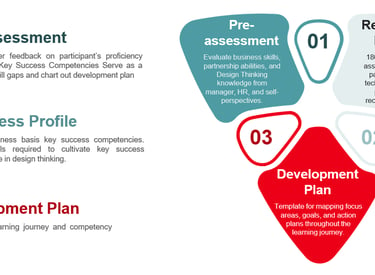
A set of elements to gauge your role readiness and chart your development plan
4 Level Ability Building Roadmap
High Impact Manager Capability Assessment (CDI) Model
CONNECT


HIMCA is a tool to assess the effectiveness of your managers and deliver the most credible manager profile.
Based on the Connect, Develop, Influence Model (CDI), HIMCA assesses the effectiveness of the managers across 10 sub-dimensions and 24 competencies.
Development Focus
Guidance
Feedback Sharing
Intra-Team Collaboration
Involvement in Decisions
Openness to Ideas
Investing Time
Competence
Reliability
Recognition/ Appreciation
Inter-Team Collaboration
Influencing Stakeholders
Conflict Management
Fair Treatment
Celebrating success
Accountability
Psychological Security
Listening
Balanced Work
Care for Individual
Information Sharing
Expectation Setting
Respectfulness
Approachability
INFLUENCE
DEVELOP
Benefits
LEARN ADVANCED MANAGERIAL CAPABILITIES IN ONE PROGRAM


STRATEGIC & SYSTEMS THINKING
Five Capability Pillars | Fifteen Advanced Managerial Capabilities
Conduct structured coaching conversations.
Use questioning to develop independent thinking.
Provide constructive developmental feedback.
Identify employee capability gaps.
Delegate opportunities for learning and growth.
Develop high-potential employees and future leaders.
BUSINESS ACUMEN & FINANCIAL INTELLIGENCE
Understand business performance and financial fundamentals.
Interpret operational and financial KPIs.
Evaluate cost, productivity, and resource utilization.
Conduct basic cost-benefit and ROI analyses.
Align managerial decisions with business objectives.
Build commercial awareness and financial accountability.

STRATEGIC INFLUENCE & PERSUASION
Connect departmental activities with organizational strategy.
Understand organizational interdependencies.
Identify long-term implications of managerial decisions.
Apply structured strategic problem framing.
Evaluate alternative courses of action.
Anticipate business challenges and emerging opportunities.
DECISION INTELLIGENCE & JUDGEMENT
Understand stakeholder interests and motivations.
Build stakeholder influence maps.
Influence peers and senior stakeholders.
Present evidence-based recommendations.
Gain commitment across functional boundaries.
Manage resistance and competing priorities.
NEGOTIATION, CONFLICT RESOLUTION & STAKEHOLDER ALIGNMENT
Apply evidence-based decision-making.
Evaluate alternatives under uncertainty.
Identify assumptions, biases, and information gaps.
Assess risks and potential consequences.
Balance decision speed with decision quality.
Establish clear decision ownership and accountability.
EXECUTIVE COMMUNICATION & LEADERSHIP PRESENCE
Diagnose interpersonal and cross-functional conflicts.
Apply interest-based negotiation techniques.
Manage disagreements constructively.
Address resistance and competing expectations.
Develop mutually workable agreements.
Convert conflict into collaborative problem-solving.
COACHING, MENTORING & CAPABILITY MULTIPLICATION
Communicate complex issues with clarity.
Structure persuasive managerial presentations.
Present recommendations and business cases.
Develop professional credibility and leadership presence.
Conduct difficult conversations.
Apply active listening and powerful questioning.
EMOTIONAL INTELLIGENCE & BEHAVIOURAL INTELLIGENCE
Define complex managerial problems accurately.
Distinguish symptoms from underlying causes.
Apply structured root-cause analysis.
Interpret relevant business and operational data.
Evaluate alternative solutions.
Implement corrective and preventive actions.
PERFORMANCE LEADERSHIP & ACCOUNTABILITY
COMPLEX PROBLEM-SOLVING & ROOT-CAUSE ANALYSIS
Develop self-awareness and emotional regulation.
Recognize behavioural triggers and interpersonal patterns.
Apply empathy and perspective-taking.
Manage difficult interactions constructively.
Respond effectively under pressure.
Build trust and psychologically safer working relationships.
Prioritize high-impact managerial activities.
Translate objectives into action plans.
Allocate resources effectively.
Identify dependencies and execution risks.
Monitor performance and implementation progress.
Establish accountability and corrective-action mechanisms.
EXECUTION DISCIPLINE & STRATEGIC PRIORITIZATION
CHANGE LEADERSHIP & ORGANIZATIONAL AGILITY
Translate business objectives into performance expectations.
Establish clear goals and measurable outcomes.
Conduct effective performance conversations.
Diagnose performance gaps.
Address underperformance fairly and consistently.
Strengthen employee ownership and accountability.
Interpret dashboards and business performance indicators.
Apply data-driven managerial reasoning.
Identify opportunities for automation and productivity improvement.
Use AI tools for research, analysis, planning, and communication.
Validate AI-generated information.
Apply data privacy, confidentiality, and responsible AI principles.
DIGITAL, DATA & AI INTELLIGENCE
Understand organizational change dynamics.
Diagnose readiness and resistance.
Communicate the purpose and implications of change.
Engage stakeholders in implementation.
Adapt to changing priorities.
Measure adoption and sustain improvements.
INNOVATION, CONTINUOUS IMPROVEMENT & VALUE CREATION
Apply ethical decision-making.
Demonstrate fairness and consistency.
Build trust through transparency and reliability.
Recognize and challenge bias.
Encourage respectful communication and constructive disagreement.
Exercise managerial authority responsibly.
TRUST, ETHICS, INCLUSION & ORGANIZATIONAL STEWARDSHIP
Interpret dashboards and business performance indicators.
Apply data-driven managerial reasoning.
Identify opportunities for automation and productivity improvement.
Use AI tools for research, analysis, planning, and communication.
Validate AI-generated information.
Apply data privacy, confidentiality, and responsible AI principles.
Objective- Future-Ready Managerial Capabilities Development Program
The objective of the Future-Ready Managerial Capabilities Development Certification – is to move your capabilities to a High Impact Manager's Domain. What Will You Be Able to Do After Completing This Program?
The program aims to develop participants' capabilities in:
1. Managerial Readiness & Effectiveness- Assess managerial strengths, identify development priorities, and establish a structured capability improvement roadmap.
2. Strategic & Business Thinking - Connect functional activities with business objectives, understand performance drivers, and make commercially informed decisions.
3. Leadership Influence & Communication- Influence stakeholders, negotiate competing priorities, communicate with credibility, and build professional relationships.
4. People Leadership & Talent Development - Coach employees, improve team performance, strengthen accountability, and develop future talent.
5. Decision-Making & Problem-Solving - Evaluate complex situations, diagnose root causes, assess risks, and make defensible decisions.
6. Performance & Execution Excellence- Translate objectives into action plans, prioritize critical activities, monitor progress, and deliver measurable outcomes.
7. Change & Innovation Leadership - Guide teams through change, identify improvement opportunities, and implement practical solutions.
8. Digital & AI-Enabled Management - Apply data, digital tools, and AI responsibly to improve managerial productivity and decision quality.
9. Ethical & Responsible Leadership - Demonstrate integrity, fairness, inclusion, and accountability in managerial decisions and workplace interactions.
10. Career & Capability Development -Build a professional development roadmap aligned with current managerial responsibilities and future career aspirations.
Overall Outcome: A more capable managerial practitioner equipped to influence people, lead teams, solve business problems, and contribute to organizational performance.
What Makes This Program Unique?
The PMI Certified Certified Most Influential Manager-Ready Practitioner/Professional Certificate provides a holistic and Organizational Objective-centric view of the managerial success landscape, addressing both fundamentals and emerging managerial effective trends.

WHY THIS CERTIFICATION?
Functional Expert
Task Supervisor
Individual Problem-Solver
Positional Authority
Reactive Decision-Maker
Routine Execution
Information Reporter
Change Recipient
Technology User
Experienced Professional
FROM
The Program Helps You Move From:
TO
Managerial Excellence Requires More Than Experience
Many professionals are promoted into managerial positions because of their technical expertise, functional performance, or organizational experience.
However, success as an individual contributor does not automatically translate into success as a manager.
Managers must learn to influence people, manage competing priorities, develop talent, navigate ambiguity, make difficult decisions, and deliver results through others.
The Future-Ready Managerial Capabilities Development Program addresses this transition through a structured approach to managerial capability assessment and development.
Business-Oriented Manager
Performance Leader
Team Capability Builder
Influential Leadership
Evidence-Based Decision-Maker
Strategic Execution
Insight-Driven Communicator
Change Leader
Digitally Empowered Manager
Future-Ready Managerial Practitioner
Program Schedule & Enrollment
LIVE Training & Selfpaced Learning Option. Designed for Working Managers/Professionals. Learning after work hours and on your terms with lifetime access




LIVE TRAINING - PREMIUM PLAN
Batch Start - Saturday 14 November - 2026
Self-Learning- LMS/Video Based Learning
Time - Any Time
Program Duration - 4 Months
Program Regular Fee - 54999/-
What you will get:
Live CHIMRP Active Competencies worth - 10000/-
Proficiency Assessment Worth - 25000/-
Individual Development Plan worth - 10000/-
Lifetime Video Recording worth - 15000/-
200 Ready Reckoner worth - 10000/-
PMI Certification Assessment - 12000/-
40 Hours of LMS based Learning Access - 15000/-
DON'T MISS , GET 50% OFF NOW !! OFFER VALID FOR 24 HOURS ONLY
LIVE TRAINING - PREMIUM PLAN
Batch Start - Friday 13 November - 2026
Live Session- Every Friday
Time - 20:00 to 22:00 pm
Program Duration - 4 Months
Program Regular Fee - 54999/-
What you will get:
Live CHIMRP Active Competencies worth - 10000/-
Proficiency Assessment Worth - 25000/-
Individual Development Plan worth - 10000/-
Live Training - 15+ Sessions worth - 75000/-
Lifetime Video Recording worth - 15000/-
200 Ready Reckoner worth - 10000/-
PMI Certification Assessment - 12000/-
40 Hours of LMS based Learning Access - 15000/-
DON'T MISS , GET 50% OFF NOW !! OFFER VALID FOR 24 HOURS ONLY
Key Deliverable
What is in this program for you!!




Who Can Join?
The CHIMRP Certification is designed for professionals seeking to strengthen their managerial capabilities and prepare for greater responsibility.
First-time managers seeking structured development.
Mid-level managers preparing for senior managerial roles.
HR and business managers.
Plant, production, quality, and operations managers.
Sales, marketing, finance, and functional managers.
Project and program managers.
Team leaders and supervisors preparing for managerial positions.
High-potential employees identified for future management responsibilities.
Professionals transitioning from individual contributor to people manager roles.
Key Takeaways
40 Hours of Action-Oriented Online Learning
Guaranteed Opportunities For Career Growth
Practice Materials and DIY Toolkits
Lifetime Videos of All Sessions
Completion Certificate
Pre Course Online Capability Assessment
Post Course Completion Online Assessment for Certification
Certified Most Influential Manager-Ready Practitioner Certificate
Syllabus
This course is structured into Six Practical Modules. The Main structure of the Program is as follows:


MODULE 2: INFLUENCE, EXECUTIVE COMMUNICATION & STAKEHOLDER MANAGEMENT
Objective: Develop the ability to communicate persuasively, influence stakeholders, manage disagreement, and secure commitment without depending exclusively on formal authority.
Chapter 1: Influence Without Authority
Understand formal and informal influence.
Map stakeholder interests and priorities.
Build credibility and professional trust.
Influence cross-functional stakeholders.
Address resistance and competing interests.
Exercise: Create a stakeholder influence map.
Chapter 2: Executive Communication & Leadership Presence
Structure concise managerial communication.
Present recommendations supported by evidence.
Communicate complex issues clearly.
Deliver effective presentations.
Handle difficult conversations and challenging questions.
Workshop: Present an executive-style business recommendation.
Chapter 3: Negotiation & Conflict Resolution
Diagnose workplace conflict.
Identify underlying interests.
Apply structured negotiation techniques.
Manage competing priorities.
Develop workable agreements and follow-up commitments.
Simulation: Negotiate a cross-functional resource allocation decision.
Chapter 4: Stakeholder Alignment & Relationship Management
Build productive professional relationships.
Align stakeholders around shared objectives.
Manage expectations and commitments.
Resolve disagreements constructively.
Maintain accountability after decisions.
Exercise: Develop a stakeholder alignment plan.
Objective: Equip managers to diagnose complex problems, prioritize effectively, execute plans, and guide teams through organizational change.
Chapter 1: Complex Problem-Solving & Root-Cause Analysis
Define problems precisely.
Distinguish symptoms from root causes.
Apply structured analysis techniques.
Use relevant data to investigate performance gaps.
Evaluate and implement corrective actions.
Workshop: Develop a root-cause analysis and corrective-action plan.
Chapter 2: Strategic Prioritization & Execution Discipline
Identify high-impact priorities.
Convert objectives into action plans.
Allocate resources effectively.
Manage dependencies and deadlines.
Track performance indicators.
Establish review and escalation mechanisms.
Exercise: Build a 30-day execution plan.
Chapter 3: Change Leadership & Organizational Agility
Understand change dynamics.
Assess organizational readiness.
Identify sources of resistance.
Communicate the rationale for change.
Engage stakeholders.
Monitor adoption and sustain improvement.
Case Study: Develop a change implementation plan.
Chapter 4: Productivity, Continuous Improvement & Operational Excellence
Identify inefficiencies and process bottlenecks.
Apply continuous improvement principles.
Evaluate improvement opportunities.
Measure productivity and quality outcomes.
Standardize successful practices.
Workshop: Develop a measurable productivity improvement proposal.
MODULE 1: MANAGERIAL READINESS, STRATEGIC THINKING & BUSINESS ACUMEN


MODULE 4: COMPLEX PROBLEM-SOLVING, EXECUTION & CHANGE LEADERSHIP
MODULE 3: EMOTIONAL INTELLIGENCE, COACHING & PEOPLE LEADERSHIP
Objective: Develop the thinking capabilities required to understand business priorities, diagnose organizational challenges, and make commercially informed managerial decisions.
Chapter 1: The Future-Ready Managerial Mindset
Understand the changing expectations of modern managers.
Differentiate individual contributor, supervisor, manager, and leader responsibilities.
Recognize common managerial effectiveness gaps.
Evaluate personal managerial strengths and development needs.
Understand the relationship between managerial behaviour and team outcomes.
Exercise: Complete a managerial effectiveness self-assessment.
Chapter 2: Strategic Thinking & Systems Thinking
Translate organizational strategy into managerial priorities.
Understand cross-functional dependencies.
Apply structured problem framing.
Identify root causes and organizational constraints.
Evaluate short-term and long-term implications.
Case Study: Diagnose a recurring business performance problem involving multiple departments.
Chapter 3: Business Acumen & Financial Intelligence
Understand business performance indicators.
Interpret basic financial and operational metrics.
Evaluate cost, productivity, and resource utilization.
Apply cost-benefit reasoning.
Link managerial decisions to business outcomes.
Workshop: Develop a business improvement case.
Chapter 4: Decision Intelligence & Managerial Judgement
Apply evidence-based decision-making.
Identify cognitive biases and unsupported assumptions.
Evaluate risks and alternatives.
Make decisions with incomplete information.
Establish accountability for decisions.
Simulation: Resolve a complex managerial decision-making scenario.
Objective: Integrate the program's capabilities into responsible managerial practice and demonstrate applied learning through structured assessment.
Chapter 1: Trust, Ethics & Responsible Leadership
Apply ethical decision-making.
Demonstrate fairness and consistency.
Build trust through reliable behaviour.
Recognize and challenge bias.
Encourage respectful workplace interactions.
Exercise authority responsibly.
Case Study: Evaluate an ethical dilemma involving business pressure and employee wellbeing.
Chapter 2: Managerial Impact & Business Value
Identify a meaningful managerial challenge.
Establish a baseline and success measures.
Develop an improvement intervention.
Engage relevant stakeholders.
Monitor implementation and outcomes.
Document results and lessons learned.
Workshop: Develop a managerial impact project.
Chapter 3: Personal Managerial Development Planning
Interpret capability assessment results.
Identify priority behavioural changes.
Establish development goals.
Define workplace application actions.
Set milestones and review dates.
Identify support required from the organization.
Deliverable: Individual Managerial Development Plan.
Chapter 4: Post-Assessment & Professional Certification
Complete the post-program capability assessment.
Demonstrate selected managerial capabilities.
Submit practical assignments.
Present the workplace application project.
Participate in the final evaluation.
Final Deliverable: Certified Most Influential Manager-Ready Practitioner credential, subject to successful completion of the certification requirements.
MODULE 5: DIGITAL, DATA, AI & FUTURE-READY MANAGERIAL CAPABILITIES
MODULE 6: ETHICAL LEADERSHIP, MANAGERIAL IMPACT & CERTIFICATION ASSESSMENT
Objective: Strengthen interpersonal effectiveness, coaching capability, team development, and performance accountability.
Chapter 1: Emotional & Behavioural Intelligence
Develop self-awareness.
Recognize emotional triggers.
Regulate responses under pressure.
Apply empathy and perspective-taking.
Manage challenging interpersonal situations.
Exercise: Prepare a personal behavioural development plan.
Chapter 2: Managerial Coaching & Mentoring
Understand the manager-as-coach role.
Apply structured coaching conversations.
Use effective questioning techniques.
Provide developmental feedback.
Develop employee problem-solving capability.
Simulation: Conduct a coaching conversation.
Chapter 3: Performance Leadership & Accountability
Establish clear performance expectations.
Align individual and team objectives.
Conduct effective performance reviews.
Diagnose performance gaps.
Address underperformance constructively.
Strengthen ownership and follow-through.
Workshop: Develop an employee performance improvement plan.
Chapter 4: Talent Multiplication & Team Effectiveness
Identify employee strengths and development needs.
Delegate for growth and accountability.
Develop high-potential employees.
Build collaborative team behaviours.
Create opportunities for knowledge sharing.
Support succession and capability development.
Exercise: Develop a team capability improvement roadmap.
Objective: Develop the ability to use data, digital tools, and AI responsibly to improve managerial productivity, decision quality, and innovation.
Chapter 1: Data-Driven Managerial Decisions
Understand business KPIs and dashboards.
Interpret performance trends.
Identify meaningful variations.
Distinguish evidence from assumptions.
Use data to evaluate managerial decisions.
Exercise: Prepare a data-based managerial recommendation.
Chapter 2: AI-Enabled Managerial Productivity
Identify suitable managerial applications of AI.
Use AI to support research, planning, and communication.
Develop effective prompts and workflows.
Validate AI-generated findings.
Protect confidential and sensitive information.
Recognize limitations, bias, and reliability risks.
Workshop: Design an AI-assisted managerial workflow.
Chapter 3: Innovation & Value Creation
Identify opportunities for innovation.
Apply structured experimentation.
Evaluate business value and implementation risks.
Design practical improvement initiatives.
Measure benefits and learning outcomes.
Case Study: Develop an innovation proposal for a managerial challenge.
Chapter 4: Future Skills & Managerial Adaptability
Recognize emerging managerial capability requirements.
Develop learning agility.
Adapt to changing business conditions.
Identify personal skill gaps.
Build a future-focused development roadmap.
Exercise: Prepare a future-ready managerial capability plan.
Program Delivery Approach
Real Case Studies: Includes examples from Global Great Managers.
Hands-On Projects: Learners design Process structures and Execution plans.
Interactive Workshops: Practical application with real-world scenarios.
Role-Play & Simulations: Engaging exercises to develop communication and influencing skills.


15+
4
Months of Duration
PRACTICAL WORKSHOPS
ACCOMPLISHMENT
Upon completion of your Learning Journey


📝 Assessment & Certification
Get Trained. Demonstrate Capability. Apply. Get Certified.
The certification uses a structured assessment approach to evaluate learning, managerial behaviour, and practical application.
Evaluation Methods
1. Pre-Program Assessment
Establish a baseline of selected managerial capabilities and identify development priorities.
2. Knowledge & Application Assessment
Evaluate understanding of advanced managerial frameworks through questions, case studies, and practical exercises.
3. Managerial Simulations
Assess selected capabilities in decision-making, communication, coaching, negotiation, and problem-solving.
4. Practical Assignments
Evaluate the participant's ability to apply the learning to realistic managerial situations.
5. Workplace Impact Project
Assess the problem definition, proposed intervention, implementation evidence, and results of a managerial improvement initiative.
6. Post-Program Assessment
Evaluate progress against the initial capability profile and identify further development priorities.
Proposed Assessment Weightage
Knowledge and conceptual application: 15%
Managerial simulations and case studies: 25%
Practical assignments: 20%
Workplace impact project: 30%
Personal development plan and reflection: 10%
Total: 100%
The assessment weights and passing criteria should be finalized before launch. Certification should depend on meeting the published requirements, including any mandatory project or practical assessment.
Final Certification
Participants who successfully complete the required assessments and program deliverables will receive the:
CERTIFIED HIGH IMPACT MANAGER-READY PRACTITIONER
Future-Ready Managerial Capabilities Development Program
BEGIN YOUR JOURNEY TOWARDS MANAGERIAL EXCELLENCE
Become a More Influential, Effective & Future-Ready Manager
The future belongs to managers who can think strategically, influence people, develop talent, navigate complexity, and consistently translate priorities into results.
Build the capabilities required to lead with confidence, make better decisions, strengthen team performance, and create meaningful organizational impact.
Assess Your Capabilities. Strengthen Your Effectiveness. Build Your Future.
Enroll in the Certified Most Influential Manager-Ready Practitioner Program
Practices with Experts to build your capabilities in Managerial Effectiveness, Business Thinking, Leadership Influence, Decision-Making, Change & Innovation and Personal Branding for Managers
PRE-ASSESSMENT
POST ASSESSMENT & CERTIFICATION
TRAINING
Assess Your Current Capabilities in Strategic & Business Intelligence, Influence, Communication & Stakeholder Leadership People Intelligence & Talent Multiplication, Execution Excellence & Organizational Agility to align yourself with the Expert abilities
Write a short Evaluate Your Nurtured Ability Post Program Completion and become Certified High Impact Manager